%20DIA%20Networking%20Explained/commquotes-feat-whatisDIA.jpg)
TL;DR
- Dedicated internet access (DIA) is a private, uncontended connection that reserves the full contracted bandwidth for one business, with symmetrical upload and download speeds that stay consistent during peak hours.
- DIA circuits link a business location directly to its ISP, usually over fiber, but a service sold as fiber is only dedicated when it is uncontended and backed by an SLA.
- Strong DIA SLAs go beyond uptime, often 99.99%, by committing to latency, jitter, packet loss, and repair times, with service credits when the provider misses those targets.
- DIA typically costs $400 to $1,500 per month for 1 Gbps, and the return usually comes from fewer disruptions and lost hours rather than from extra speed.
It isn’t uncommon for businesses to reach a point where standard broadband can’t keep up with the speed or reliability their operations need. That’s where Dedicated Internet Access, or DIA, comes in. Unlike shared broadband connections, DIA guarantees a private, high-performance link between your organization and the internet.
The market reflects this growing demand. The DIA sector reached nearly $12 billion in 2025, and it’s projected to grow at a 6.9% compound rate through 2029.1 Clearly, more organizations are recognizing the importance of consistent, business-grade connectivity for cloud applications, collaboration, and modern network performance.
In this blog, we’ll walk through what DIA is, how it works, and how to evaluate whether it’s the right choice for your business.
What Is DIA Internet?
Dedicated Internet Access, sometimes called a dedicated internet line, is a private service that connects your business directly to the internet without splitting your bandwidth between neighboring users.
In other words, what you pay for is what you get. If your contract is for 1 Gbps, that’s what your business has available at all times, regardless of network congestion in your area.
%20DIA%20Networking%20Explained/commquotes-blog-whatisDIA-inline1.jpg?width=850&height=350&name=commquotes-blog-whatisDIA-inline1.jpg)
Key characteristics of DIA internet include:
- Symmetrical Speeds: Equal upload and download speeds for performance consistency.
- Guaranteed Bandwidth: No slowdowns during peak usage hours.
- Service Level Agreements (SLAs): Providers guarantee uptime (often 99.99%) and response times.
- Business-Grade Support: Priority technical assistance and faster issue resolution than standard broadband services.
DIA was designed to provide predictable connectivity for bandwidth-heavy workloads, so organizations can access apps like VoIP, video conferencing, cloud computing, and SD-WAN without slowdowns.
DIA vs Leased Line vs Private Line
Dedicated connectivity is full of overlapping terminology, and providers do not always use the same labels. “Leased line” is often used for a dedicated, uncontended circuit with symmetrical speeds and SLAs, which is functionally close to DIA. “Private line” can mean point-to-point connectivity that is not public internet at all. Treat the name as a starting point and confirm the technical details, not the label, before you compare quotes.
What Is a DIA Circuit & How Does a DIA Network Work?
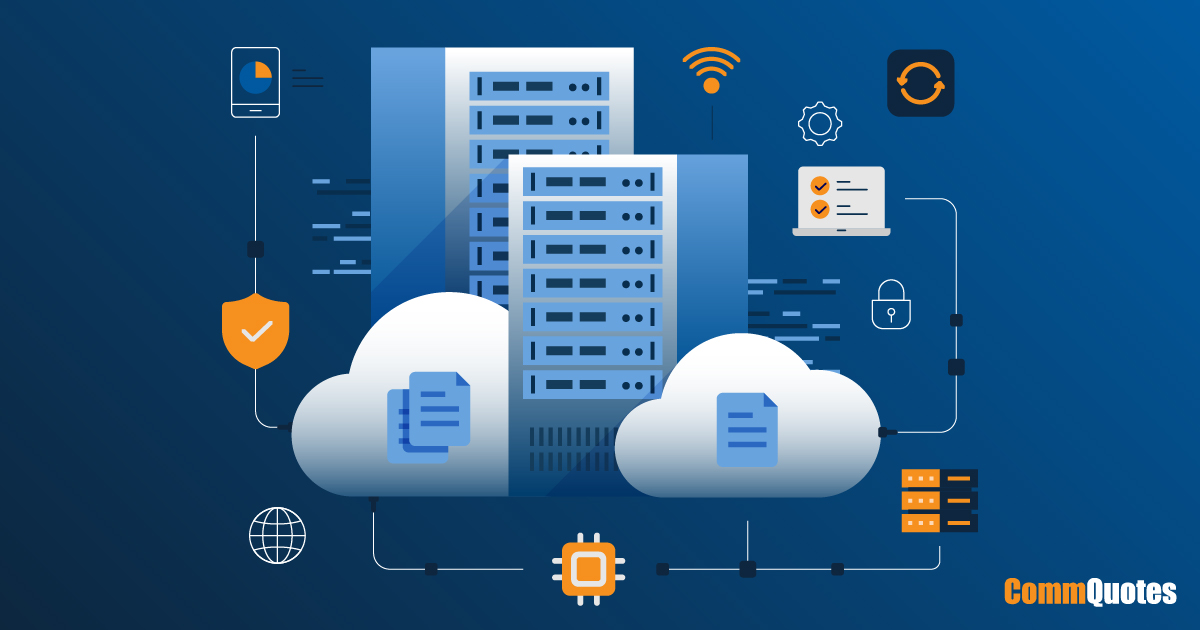
A DIA network is the infrastructure used to deliver a dedicated internet connection. It uses physical circuits, often fiber-optic, to link your location directly to your internet service provider (ISP). These are called DIA circuits, and they’re completely private – no other business shares your connection.
There are two common types of DIA circuits:
- Fiber DIA: Uses fiber-optic cables to deliver ultra-fast, low-latency connections ideal for enterprises and data-intensive operations.
- Ethernet over Copper (EoC) or TDM Circuits: Traditional wired options, often used in areas where fiber infrastructure is limited.
Not sure which would be best for your business? CommQuotes can help you evaluate DIA networking options based on bandwidth needs, geographic coverage, and long-term growth plans.
Understanding DIA SLAs: The Metrics That Protect Performance
A DIA connection is only as good as the commitments behind it. Most buyers look at uptime first, but strong DIA SLAs also define how the connection should perform day to day, especially for real-time apps.
Uptime Is The Baseline
Uptime tells you how often the service should be available. It does not tell you whether your calls will sound clean or whether cloud apps will feel responsive at peak hours. For that, you need performance metrics.
Latency, Jitter & Packet Loss Are What Real-Time Apps Feel
If your business runs VoIP, video meetings, contact centers, or cloud desktops, these numbers matter as much as bandwidth.
Latency is the time it takes data to travel between your site and its destination. High latency causes lag and people talking over each other on calls.
Jitter is a variation in delay. High jitter can cause choppy audio and unstable video.
Packet loss is dropped traffic. Even small losses can hurt voice quality and file transfers.
Response Time vs Resolution Time
Some SLAs define how quickly a provider must acknowledge a ticket. Others define how quickly they must restore service. Those are not the same thing. When you compare DIA providers, make sure you know which one you are getting in writing.
What To Confirm In The SLA Before You Sign
Ask providers to specify the exact SLA scope, including what is measured, where it’s measured (provider core vs last mile), and what credits apply if commitments are missed. That way, you’re comparing apples to apples, not marketing language.
Dedicated Internet Access vs Broadband
Understanding how dedicated internet and shared connections compare can help you make an informed choice. Here’s how these options stack up:
%20DIA%20Networking%20Explained/commquotes-blog-whatisDIA-inline2.jpg?width=850&height=460&name=commquotes-blog-whatisDIA-inline2.jpg)
Shared internet can work for small offices with basic connectivity needs, but organizations that depend on real-time apps or cloud-based systems benefit much more from the stability of a DIA circuit.
5 Benefits Of Dedicated Internet Access
Switching to dedicated internet access delivers several business advantages, including:
1. Reliable Performance
DIA provides consistent, predictable speeds at all times. Unlike broadband, your performance doesn’t dip when the network gets busy. This stability supports tools like video conferencing and unified communications, which depend on steady bandwidth to work effectively.
2. Stronger Security
Because DIA circuits are private, they naturally reduce exposure to common risks found in public networks. Plus, you can integrate DIA internet with firewalls, VPNs, and other security tools for even stronger protection.
3. Better Cloud Connectivity
An estimated 94% of enterprises use some form of cloud service.2 DIA provides the low-latency connections needed for cloud platforms to perform optimally, which means fewer disruptions, faster access to data, and more productive collaboration across teams.
4. Guaranteed Uptime
DIA services come with strong SLAs that often promise 99.99% uptime. And if there’s an issue, providers commit to quick response and resolution times.
5. Scalable Bandwidth
Whether you need 100 Mbps or 10 Gbps, DIA networks can scale to match your business’s growth without rebuilding your network or replacing equipment.
%20DIA%20Networking%20Explained/commquotes-blog-whatisDIA-inline3.jpg?width=850&height=350&name=commquotes-blog-whatisDIA-inline3.jpg)
Is Dedicated Internet Access Worth the Cost?
DIA pricing depends on several factors, including location, bandwidth requirements, provider availability, and contract terms. Typical costs range between $400–$1,500 per month for 1 Gbps, depending on your market and carrier.
The ROI Case Is Usually Downtime & Productivity
The ROI for DIA is rarely “we got more Mbps.” It is fewer disruptions, fewer workarounds, fewer emergency escalations, and fewer hours lost to unstable connectivity. If internet performance affects customer experience, revenue capture, or service delivery, DIA often pays for itself in avoiding impact.
CommQuotes simplifies the buying process by comparing DIA pricing and service details across multiple providers. We present your options side by side, making it easy to understand bandwidth, SLAs, and contract flexibility before you make a decision.
How To Size A DIA Circuit
DIA is an investment, so the goal is not just to buy “the fastest.” The goal is to buy the right capacity, with the right guarantees, so performance problems stop showing up in daily operations.
Start With What Your Apps Demand
Speed tests are useful, but they do not reflect how your applications behave during meetings, peak usage, and uploads. If teams complain about video calls dropping, CRM lagging, file uploads crawling, or VPN performance being inconsistent, those are sizing signals.
Plan For Upload-Heavy Reality
Many businesses are more upload-heavy than they think. Video meetings, cloud backups, large file transfers, and SaaS platforms all depend on consistent upstream performance. DIA’s symmetrical speeds matter most when uploads are part of everyday work.
Build A Growth Buffer Without Overbuying
If you are expanding headcount, adopting more cloud services, centralizing data, or adding locations, you will likely need more bandwidth over time. A practical approach is to size DIA for today’s normal peak, then confirm how upgrades work so you can scale without renegotiating your entire strategy.
What Businesses Benefit From Dedicated Internet Access?
Dedicated Internet Access is best suited for:
Multi-Location Enterprises
Large organizations often rely on constant connectivity between offices, remote teams, data centers, and cloud platforms. DIA helps standardize performance across sites, so employees experience the same level of reliability regardless of where they work.
Finance Firms
Financial institutions process sensitive transactions and need networks they can trust throughout the workday. DIA supports these requirements through consistent speeds, strong SLAs, and a private connection that reduces exposure to outside threats.
Healthcare Organizations
Clinics, hospitals, and medical practices depend on secure and accessible electronic health records. DIA helps maintain reliable access to these systems while supporting HIPAA-aligned security practices.
Education & Government
Schools, universities, and public sector agencies run large networks that support both staff and community users. DIA circuits stay up during peak demand, providing dependable connectivity for learning platforms and systems people rely on.
Manufacturers
Even small disruptions in manufacturing environments can slow down production or impact supply chain operations. DIA delivers the consistent performance required for real-time monitoring, equipment control systems, and industrial IoT deployments.
Even smaller businesses benefit when uninterrupted connectivity matters. Companies running customer support centers, e-commerce stores, or UCaaS platforms often find that DIA’s consistency directly impacts productivity and customer experience.
%20DIA%20Networking%20Explained/commquotes-blog-whatisDIA-inline4.jpg?width=850&height=350&name=commquotes-blog-whatisDIA-inline4.jpg)
What To Compare In A DIA Quote: A Practical Checklist
Two DIA quotes can look similar on the surface, then perform very differently in real life. Here’s what to compare so you can make a confident decision.
Monthly Cost vs One-Time Costs
Start by separating monthly recurring charges from non-recurring charges. Installation, construction, and activation fees can change the real cost of the decision, especially if fiber buildout is required.
Installation Timeline & Delivery Risk
Some DIA installs are straightforward. Others depend on construction, permitting, or last-mile availability. Ask for expected intervals and what can cause delays. This matters if you have a project deadline or a migration window.
SLA Scope & Performance Commitments
Compare the full SLA scope covered above, not just uptime, and confirm how each metric is measured.
Support Model & Escalation Path
Confirm whether support is 24/7, how tickets are handled, and what escalation looks like. If you operate across time zones or rely on after-hours operations, support terms matter as much as speed.
Contract Flexibility & Upgrade Path
Bandwidth needs change. Ask how upgrades work, whether pricing steps are predictable, and what happens if you need to adjust service mid-term. A good DIA agreement should support growth, not punish it.
Redundancy Options You Can Trust
If uptime is critical, compare diverse routing options and verify physical diversity. If redundancy is part of the plan, it needs to be built into the quote, not assumed.
Dedicated Internet Access (DIA) FAQs
What Does “Uncontended” Mean In DIA?
It means the bandwidth allocated to your connection is reserved for your business and not pooled with neighboring customers. That’s a big reason DIA stays consistent during peak hours.
Is DIA Always Delivered Over Fiber?
Often, yes, because fiber supports high capacity and low latency. But availability depends on location. In some markets, providers may offer dedicated connectivity over alternative last-mile technologies when fiber is limited. The reverse is also true: a service sold as “fiber” is not automatically dedicated, since many fiber services share bandwidth across customers. Confirm the service is uncontended and SLA-backed rather than relying on the label.
How Long Does It Take To Install A DIA Circuit?
It depends on last-mile availability and whether construction is required. When fiber and access equipment are already in place, installation can take a few weeks. Typical timelines run 30 to 90 days, and sites that need new construction or permits can take longer.
What SLA Protections Does DIA Provide That Broadband Doesn’t?
Broadband is usually sold on a best-effort basis, with no guaranteed speed and little or no compensation when service degrades. DIA SLAs typically commit to uptime (often 99.99%), performance targets for latency, jitter, and packet loss, and repair times, with service credits when the provider misses them. That gives you contractual recourse rather than a ticket in a support queue.
Do I Need A Redundant DIA Circuit?
Not always. If downtime creates immediate operational or revenue impact, redundancy is worth evaluating. Many businesses use dual DIA, or DIA plus a secondary link, to protect continuity.
Can DIA Be Used With SD-WAN?
Yes. DIA is commonly used as a primary transport for SD-WAN because of symmetrical speeds and predictable performance. SD-WAN can also help manage failover between links.
Does DIA Include A Static IP Address?
Most DIA services include at least one static IP address, and many offer a larger block for an additional fee. Static IPs don’t change, which makes them necessary for hosting servers, running site-to-site VPNs, allowing remote access, and allowlisting your connection with cloud and security services. Confirm how many addresses each quote includes.
What’s The Difference Between Managed And Unmanaged DIA?
With unmanaged DIA, sometimes called wires-only, the provider delivers the circuit and your team supplies, configures, and maintains the router and edge equipment. With managed DIA, the provider also supplies and runs that equipment, usually with 24/7 monitoring and hardware replacement commitments. Managed DIA costs more but suits teams without in-house network expertise.
What Information Should I Have Ready Before Requesting DIA Quotes?
Know your locations, your current connection type, the applications you rely on, and any uptime requirements. If you have usage patterns or peak-time pain points, that also helps providers size and quote accurately.
How CommQuotes Helps You Choose The Right DIA Provider
Your business deserves a connection built for performance and growth. Dedicated Internet Access offers exactly that – but choosing the right dedicated internet provider can feel overwhelming when every vendor promises “the best service.”
CommQuotes helps make the decision easier. Our technology experts:
- Provide vendor-agnostic comparisons across 450+ providers.
- Deliver custom pricing and feature matrices side by side.
- Help identify network redundancy options for uptime protection.
- Support your team through contract negotiation and lifecycle management.
Our mission is to help you find the best connectivity solution for your business – at better-than-direct pricing and with no added fees.
Ready to find the right internet provider for your business? Contact us today to get started!
Sources:

%20Everything%20You%20Need%20to%20Know/commquotes-feat-whatiscolocation.jpg)