TL;DR
-
Omnichannel communication integrates voice, email, chat, SMS, and social into one platform that carries customer context across every channel, so people never have to repeat themselves when they switch.
-
Unlike multichannel setups where channels run in silos, an omnichannel approach connects them, and companies that adopt it reach 67% CSAT scores versus 28% for disconnected operations.
-
Building an omnichannel strategy takes more than software: map the customer journey, unify data across systems, pick a platform like CCaaS or UCaaS that fits your CRM, and train the team.
Customers expect to reach the businesses they work with on their own terms – through whatever channel is most convenient at any given moment. They want to start a conversation by text, continue it through chat, and finish it on a phone call without having to repeat themselves at each step.
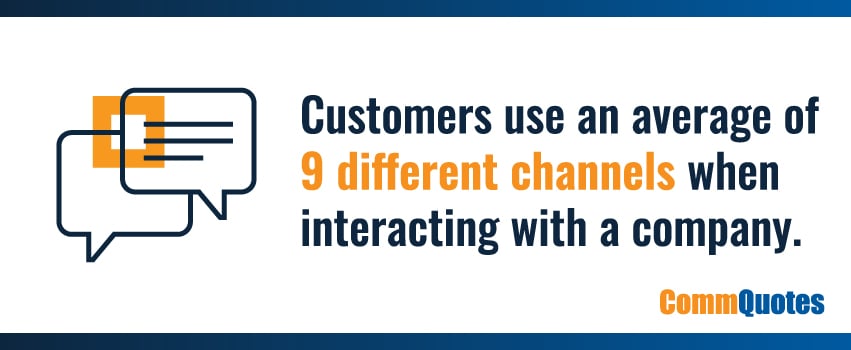
This expectation is now the baseline, not the exception. Today’s customers use an average of nine different channels when interacting with a company, and 56% have had to repeat themselves due to disconnected channels.1
In this guide, we’ll explain how omnichannel communication helps businesses build customer experiences that meet modern expectations.
What Is Omnichannel? The Definition of Omnichannel
The definition of omnichannel – sometimes spelled "omni-channel" – refers to a unified approach to customer communication and engagement across all available channels. The defining characteristic isn't the number of channels in use, but rather how seamlessly they connect to one another.
Multichannel vs. Omnichannel Definition
Multichannel and omnichannel are often used interchangeably, but the differences are important:
- Multichannel means a business uses multiple channels (phone, email, chat, and social media), often with separate teams and tools managing each one.
- Omnichannel means those channels are integrated into a single, connected experience – with customer context, conversation history, and data flowing seamlessly between them.
A multichannel business might offer phone, email, and chat support, but the agent answering your call has no idea you already sent two emails about the same issue. An omnichannel business does.
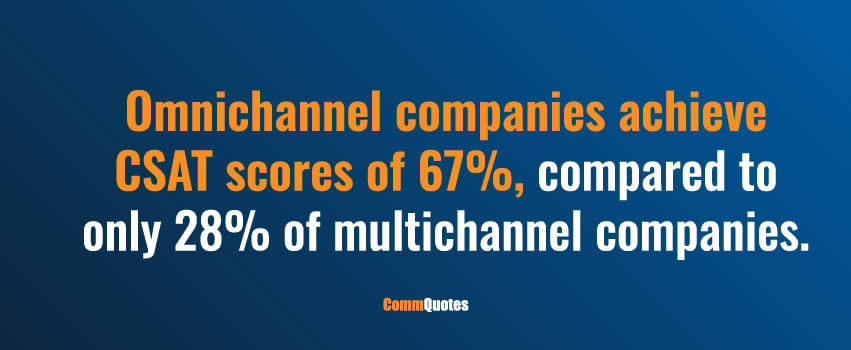
The difference in customer satisfaction is measurable. Companies that use an omnichannel approach achieve customer satisfaction (CSAT) scores of 67%, compared to only 28% for disconnected multichannel operations.2
What Is Omnichannel Communication?
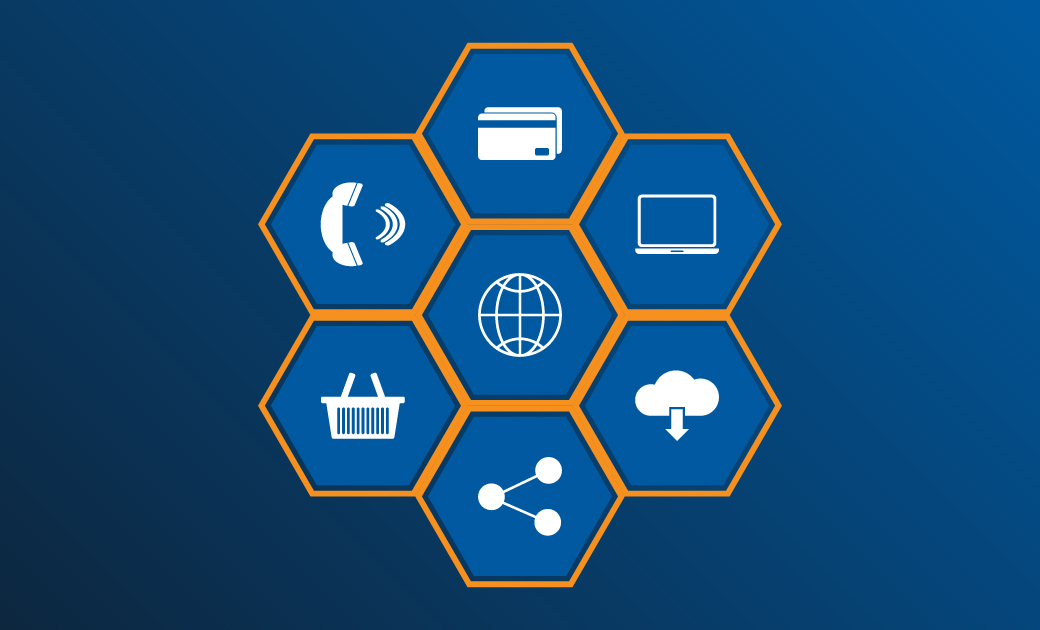
In technical terms, omnichannel communication is the integration of multiple communication channels (voice, video, SMS, email, chat, social media) into a unified platform that maintains continuity across every customer interaction.
The most common channels supported in an omnichannel approach include:
- Voice calling (inbound and outbound)
- Live chat and web messaging
- SMS and MMS
- Social media (Facebook, Instagram, X, WhatsApp)
- Video conferencing
- Self-service portals and IVR
- AI-powered chatbots and virtual agents
The right mix will ultimately depend on your customer base, industry, and infrastructure – but the unifying principle is the same: every channel feeds into a single source of truth for each customer relationship.
How Omnichannel Technology Works
Omnichannel technology is built on a unified data layer that collects, stores, and surfaces customer interaction history across every channel. The most common platforms that deliver omnichannel capabilities include:
Omnichannel Messaging Platform
An omnichannel messaging platform centralizes all written communications (chat, SMS, email, social) into a single agent interface. Messages from different channels appear in one queue with full conversation history attached, eliminating the need for agents to switch between disconnected systems.
Contact Center as a Service (CCaaS)
For most customer-facing teams, a modern CCaaS solution is typically where omnichannel capabilities live. CCaaS platforms deliver intelligent routing, real-time analytics, agent workflows, and integrations with CRM systems.
Unified Communications as a Service (UCaaS)
A UCaaS platform handles internal collaboration like voice, video, and messaging, but they’re increasingly integrating with customer-facing tools for true omnichannel communication. This integration lets employees collaborate seamlessly while providing better customer experiences.
CRM Integration
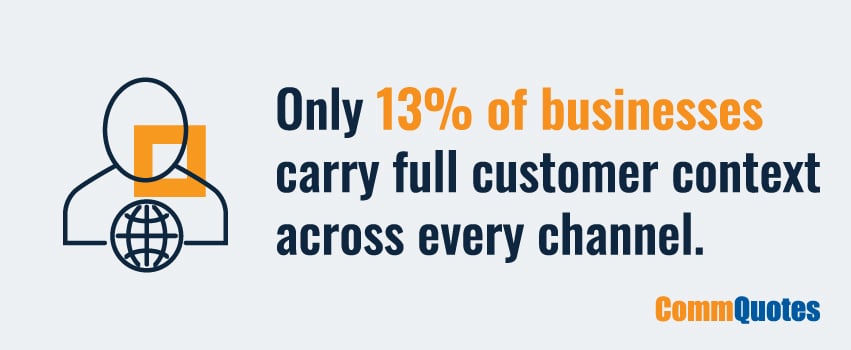
True omnichannel communication requires deep integration with the CRM, helpdesk, or customer data platform where customer records live. Only 13% of businesses fully carry customer context across every channel,2 representing a significant opportunity for competitive advantage.
What Does Omnichannel Mean in Practice?
Still not sure what omnichannel means in real-world terms? Let’s consider a typical customer journey:
A customer browsing your website starts a chat with a support agent. Later that day, they call your support line, and the agent who answers already has full context of that earlier chat – including what was discussed and what questions remain unresolved. The next morning, they receive a follow-up text confirming next steps, with all prior conversation history attached.
The customer never has to repeat their story, and the agent doesn't have to dig through siloed systems. The experience is seamless because the omnichannel platform connects every touchpoint.
Why Does Omnichannel Customer Engagement Matter?
Omnichannel customer engagement is fundamentally about meeting customers where they are – and doing it consistently.
The business case for omnichannel is strong:
- Higher Customer Satisfaction: Customers don't have to repeat themselves or chase down support across multiple systems.
- Improved Retention: Seamless experiences directly correlate with stronger customer loyalty.
- Better Agent Productivity: Unified interfaces and full conversation context mean faster resolution times.
- More Accurate Insights: Centralized data delivers a complete view of customer behavior across channels.
- Increased Revenue: Customers engaged across multiple channels consistently spend more than those reached through a single channel.
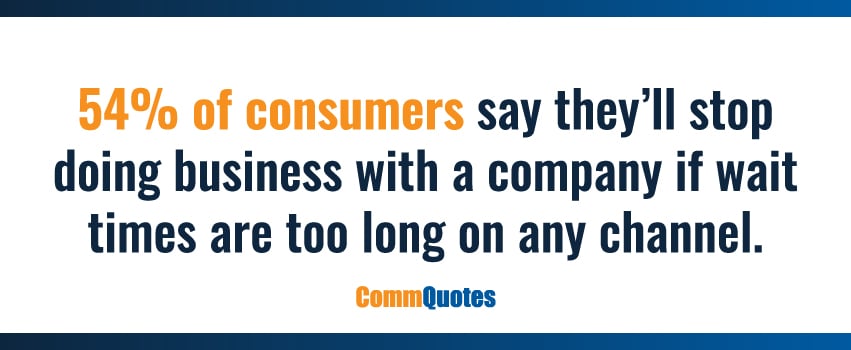
With 54% of consumers now saying they’ll stop doing business with a company if wait times become too long on any channel,3 organizations that fail to implement omnichannel strategies are at a major disadvantage.
6 Steps for Building a Better Omnichannel Communication Strategy
A successful omnichannel communication strategy isn't just about deploying the right technology. It requires aligning your channels, processes, and data to provide a consistent customer experience.
Here are the key elements of an effective omnichannel approach:
Map Your Customer Journey
Identify every touchpoint where customers currently interact with your business and where gaps exist. Understanding the current journey reveals where omnichannel integration will have the most impact.
Audit Current Systems
Determine which channels are already integrated and where data silos still exist. This audit often reveals surprising disconnects between systems that appear integrated on the surface.
Define the Channel Mix
Not every business needs every channel. Focus on the ones your customers actually use. This focused approach prevents over-investment in channels that won't deliver value.
Choose the Right Platform
Evaluate omnichannel messaging platforms, CCaaS, and UCaaS solutions based on integration depth, scalability, and total cost of ownership. The right platform should integrate seamlessly with your existing CRM and helpdesk systems.
Train Your Team
The best technology fails without staff equipped to use it well. Training on new systems, workflows, and customer service approaches ensures adoption and maximizes return on investment.
Measure and Iterate
Track metrics like first-contact resolution, customer satisfaction, channel mix, and cost per interaction, and adjust over time. Continuously improving based on data can help ensure your strategy evolves with customer expectations.
Omnichannel Communication FAQs
What is omnichannel communication?
Omnichannel communication integrates multiple channels (voice, video, SMS, email, chat, and social media) into a single platform that keeps every customer interaction connected. The point is not how many channels you run, but how seamlessly they share context. When a customer moves from chat to a phone call, the conversation history and data follow them, so nothing gets lost and no one has to start over. It gives each customer relationship one source of truth across every touchpoint.
What is the difference between multichannel and omnichannel communication?
Both use several channels, but the connection between them is what sets them apart. A multichannel business runs channels like phone, email, and chat separately, often with different teams and tools, so the agent taking your call may not know you already emailed twice about the same issue. An omnichannel business links those channels into one connected experience, with customer context, conversation history, and data flowing between them. In short, multichannel offers choice; omnichannel adds continuity across every choice.
What channels are part of omnichannel communication?
Omnichannel communication commonly brings together voice calling (inbound and outbound), email, live chat and web messaging, SMS and MMS, social media platforms like Facebook, Instagram, X, and WhatsApp, video conferencing, self-service portals and IVR, and AI-powered chatbots. The right mix depends on your customer base, industry, and existing infrastructure. You do not need every channel; you need the ones your customers actually use. Whatever the combination, each channel should feed into a single source of truth for the customer.
How does omnichannel communication work?
Omnichannel communication runs on a unified data layer that collects, stores, and surfaces each customer's interaction history across every channel. Messages and calls from different channels flow into one interface, so an agent sees the full context without switching between disconnected systems. This usually lives in platforms like an omnichannel messaging platform, CCaaS, or UCaaS, connected to your CRM or helpdesk. That integration is what lets a conversation continue smoothly when a customer switches from one channel to another.
What is the difference between CCaaS and UCaaS?
CCaaS (Contact Center as a Service) is built for customer-facing teams, delivering intelligent routing, real-time analytics, agent workflows, and CRM integrations. It is typically where omnichannel capabilities live. UCaaS (Unified Communications as a Service) handles internal collaboration such as voice, video, and messaging, though it increasingly integrates with customer-facing tools too. Put simply, CCaaS focuses on how you serve customers, while UCaaS focuses on how your teams work together. Many businesses use both, and the two are converging.
How do you build an omnichannel communication strategy?
Start by mapping your customer journey to find every touchpoint and gap, then audit your current systems to see where data silos still exist. Define a channel mix based on the channels your customers actually use, and choose a platform (omnichannel messaging, CCaaS, or UCaaS) that integrates with your CRM and helpdesk. Train your team so the technology gets adopted, then measure results like first-contact resolution and customer satisfaction, and iterate over time. Strategy, not just technology, is what makes it work.
Why is omnichannel communication important?
Omnichannel communication matters because customers now expect to reach you on their own terms and to be recognized wherever they land. The payoff is measurable: companies using an omnichannel approach reach CSAT scores of 67%, compared with 28% for disconnected multichannel operations. It also improves retention, agent productivity, and the accuracy of customer insights, and it tends to lift revenue, since customers engaged across several channels spend more. With 54% of consumers willing to leave over long waits on any channel, the cost of ignoring it is high.
What are the common challenges of implementing omnichannel communication?
The biggest hurdle is usually data silos: systems that look integrated on the surface but do not actually share customer context. Only 13% of businesses fully carry that context across every channel, which is why an honest audit of current systems matters early. Choosing the wrong platform is another risk, leaving you paying for features you do not use or missing the ones you need. Adoption is the last one; even strong technology fails without a team trained to use it well.
Find the Right Omnichannel Solution With CommQuotes
Choosing the right omnichannel communication platform – and integrating it with your existing systems – is a big decision that deserves careful evaluation. The wrong choice means paying for features you don't use, missing the ones you need, or ending up with a fragmented experience that defeats the purpose entirely.
CommQuotes helps businesses navigate the omnichannel landscape with vendor-agnostic guidance across our portfolio of 450+ vetted suppliers. We assess your environment, compare the top CCaaS and UCaaS platforms based on your actual needs, and provide honest recommendations at better-than-direct pricing – at no cost to you.
Whether you're building an omnichannel strategy from scratch or rethinking an existing setup, we're here to help. Connect with our team today to get started.
Sources:

/commquotes-feat-whatisCCaaS.jpg)