TL;DR
-
The benefits of managed IT services come from replacing reactive, in-house IT with proactive coverage from a provider, giving you predictable costs, 24/7 monitoring, and specialists across security, cloud, and networking.
-
A managed service provider turns unpredictable IT spending into a fixed monthly fee while adding proactive threat detection, faster issue resolution, compliance support, and the ability to scale without new hires.
-
With 76% of small and medium businesses already using MSPs for at least some functions, the real question for most companies is which provider fits, not whether to outsource IT at all.
Running IT in-house has gotten harder over the past decade. Workforces are more distributed, cybersecurity threats are more sophisticated, and the technology stack is broader than ever. But the people available to manage all this complexity have not multiplied at the same rate, which has created a gap that managed IT services help fill.
The global managed services market reached $424.14 billion in 2026,1 reflecting a major shift in how organizations approach IT operations. Read on to learn what managed IT services are, what they can do for your business, and what to look for when evaluating providers.
What Are Managed IT Services?
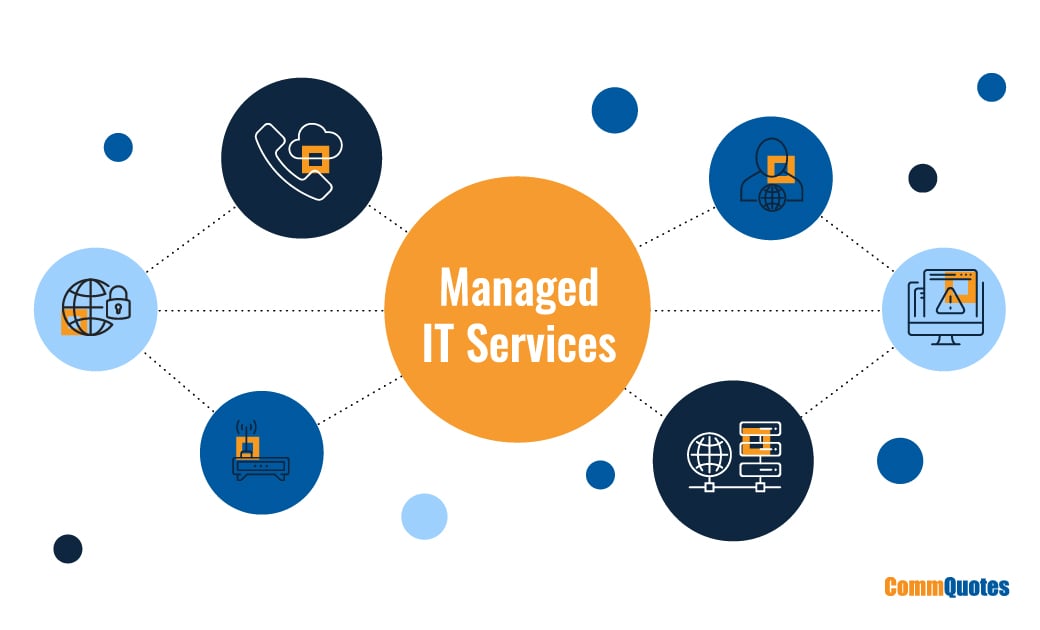
Managed IT services are when businesses outsource of some or all of their IT operations to a third-party provider – often called a managed service provider (MSP). Services typically covered include:
- Network monitoring
- Cybersecurity
- Helpdesk support
- Cloud management
- Infrastructure maintenance
- Strategic IT consulting
Unlike traditional break-fix IT support, where vendors only get involved when something goes wrong, managed IT support services monitor systems continuously to prevent problems before they happen while providing expertise across your stack.
10 Benefits of Managed IT Services
Managed IT services deliver several value across multiple dimensions of business operations, including:
1. Predictable Monthly Costs
Managed IT services use a fixed monthly fee, replacing the unpredictable spending pattern of in-house IT with a line item finance teams can budget reliably. Instead of surprise hardware purchases, emergency repair bills, and unexpected project costs, organizations know exactly what they'll spend each month.
This predictability makes IT spending part of your operational expenses (OpEx) rather than sporadic capital expenses (CapEx), so you can treat IT budgets like other business utilities.
2. 24/7 Coverage Without the Headcount
Around-the-clock IT support is nearly impossible to deliver with a typical in-house team. Managed IT services include 24/7 monitoring and helpdesk coverage without the cost and complexity of building that infrastructure yourself.
That means your business gets coverage during nights, weekends, and holidays – without having to maintain an expensive on-call rotation or hiring night-shift staff.
3. Access to Specialized Expertise
A single in-house IT professional cannot be an expert in cybersecurity, cloud architecture, networking, compliance, and end-user support simultaneously. MSPs bring deep specialists across every domain, providing bench strength most organizations cannot justify hiring independently.
When you need expertise in a specific area, whether that's cloud migration, security compliance, or network optimization, an MSP provides that knowledge without requiring you to hire and train specialists full-time.
4. Proactive Threat Detection
Modern MSPs use advanced monitoring and security operations center (SOC) capabilities to detect threats early, contain them quickly, and remediate them before they spread across your environment.
That proactive security posture is one of the most valuable benefits of managed IT services. Rather than discovering breaches after they've caused damage, MSPs catch suspicious activity in real time and respond before sensitive data is exposed.
5. Faster Issue Resolution
With dedicated ticketing systems, SLA commitments, and specialists ready to respond, managed IT services resolve problems faster than overburdened internal teams typically can.
When your IT issues resolve faster, your business spends less time disrupted and more time operating normally. Faster resolution also means lower total cost of problems, since business productivity isn't lost during extended downtime.
6. Scalability on Demand
Adding new users, locations, or services with an MSP is easy. The right managed services partner scales with you – no need to hire and train every time the business grows. This agility enables you to respond to business opportunities without waiting for your IT capacity to catch up.
7. Strategic IT Planning
The best managed IT services go beyond keeping the lights on. They include strategic advisory through quarterly business reviews, technology roadmaps, and recommendations based on where your business is heading.

Rather than treating IT as a cost center focused on routine maintenance, strategic MSP partners help you understand how technology investments align with business goals and what capabilities you need as your business evolves.
8. Compliance Support
Compliance becomes harder as your IT infrastructure grows, and maintaining compliance typically requires specialized expertise that in-house teams often lack. An MSP familiar with your industry's regulatory environment can help you make sure that your IT systems and practices don't create compliance risks.
9. Reduced Burnout for Internal IT
Even businesses with a strong in-house IT team can benefit from MSP support because it frees internal resources from after-hours tickets and routine maintenance. Your in-house IT staff can focus on projects that directly support business strategy rather than spending nights and weekends responding to break-fix emergencies.
10. Better Vendor Management
A good MSP helps you manage your entire IT supplier ecosystem, including telecom, cloud providers, software vendors, and hardware suppliers. An MSP consolidates relationships, surfaces inefficiencies across your vendor portfolio, and ensures that different pieces of your technology infrastructure work together effectively.
This vendor management capability often uncovers cost savings and performance improvements that organizations miss when managing multiple vendors independently.
Why Do Businesses Need Managed IT Services in 2026?
The case for managed IT services extends beyond cost or coverage alone. It centers on positioning your business to operate effectively in an environment where technology complexity, cybersecurity risk, and competitive pressure all keep rising.
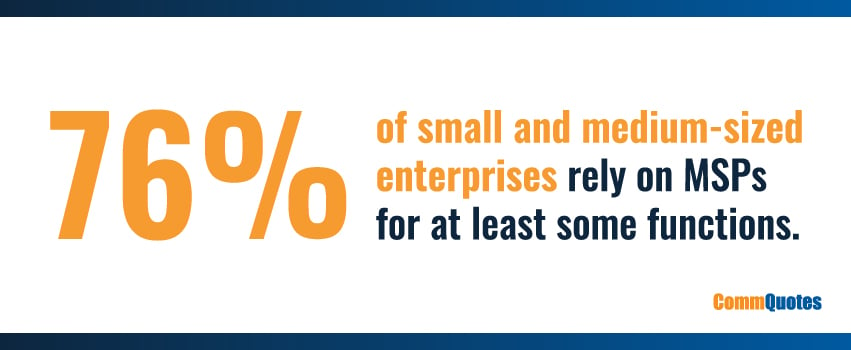
Organizations that rely entirely on in-house IT often find themselves in reactive mode: fixing problems as they arise, deferring strategic initiatives, and absorbing the operational cost of stretched-thin teams. Meanwhile, 76% of small and medium-sized enterprises have already recognized this gap and now rely on MSPs for at least some functions.2
For most businesses, the question isn't whether to use managed IT services – it's which provider is the right fit.
How To Choose the Right Provider for IT Managed Support
Not all MSPs are created equal. The wrong choice means paying for services you don't need or getting locked into a partnership that doesn't scale. When evaluating providers, look at:
- Service Scope: Does the provider cover the areas where your team needs the most support?
- SLA Commitments: What response times and uptime guarantees are in writing?
- Security Capabilities: What does the provider's SOC and incident response look like?
- Industry Experience: Has the provider served organizations like yours before?
- Pricing Structure: Per-user, per-device, all-inclusive, or tiered?
- Exit Terms: What happens if the partnership doesn't work out?
The right MSP should understand your environment, scale with your business, provide expertise you don't have in-house, and operate as a true partner rather than a vendor simply collecting monthly fees.
Benefits of Managed IT Services FAQs
What are managed IT services?
Managed IT services are IT operations you outsource to a third-party provider, known as a managed service provider or MSP, under an ongoing contract. Instead of the break-fix model, where a vendor only steps in after something breaks, an MSP monitors your systems continuously to catch problems before they cause disruption. The provider takes ongoing responsibility for keeping a defined set of your systems running, secure, and up to date, which gives your business consistent coverage and specialized expertise without building it all in-house.
What's included in managed IT services?
Coverage varies by provider and contract, but managed IT services typically include network monitoring, cybersecurity, helpdesk support, cloud management, infrastructure maintenance, and strategic IT consulting. Some providers handle your full environment end to end, while others work alongside your existing team and take ownership of specific functions. The scope is defined in your agreement, so it's worth confirming that the provider covers the areas where your business needs the most support before you sign.
What are the main benefits of managed IT services?
The core benefit is trading unpredictable, reactive IT for steady, proactive coverage. Managed IT services turn variable costs into a predictable monthly fee, add round-the-clock monitoring and helpdesk support, and give you access to specialists across security, cloud, and networking that most teams can't hire individually. You also get faster issue resolution, easier scaling as you grow, proactive threat detection, compliance support, and strategic planning. Together, these free your internal team to focus on work that moves the business forward.
How do managed IT services improve cybersecurity?
Managed IT services strengthen security by shifting from reacting to breaches to catching them early. Providers use continuous monitoring and security operations center (SOC) capabilities to detect suspicious activity in real time, contain it quickly, and remediate it before it spreads. Because most internal teams don't have the time to track evolving threats around the clock, an MSP fills that gap with dedicated expertise and 24/7 coverage. Providers familiar with regulated industries can also help keep your systems aligned with compliance requirements.
How do managed IT services reduce IT costs?
Managed IT services replace unpredictable spending with a fixed monthly fee, so surprise hardware purchases and emergency repair bills stop derailing your budget. That shifts IT from sporadic capital expenses to steady operating expenses you can plan around. You also avoid the full cost of hiring, training, and retaining specialists across every domain, since an MSP spreads that expertise across many clients. Add in less downtime and better vendor management, and the total cost of running IT often comes down.
What's the difference between managed IT services and break-fix support?
The difference is proactive versus reactive. Break-fix support only gets involved after something goes wrong, and you're billed per incident, hour, or project. Managed IT services monitor your systems continuously to prevent problems before they happen, delivered under a fixed monthly fee and a service-level agreement. Break-fix can suit organizations with minimal IT needs or very tight budgets, but most businesses benefit from the predictable costs, steadier performance, and 24/7 coverage that the managed model provides.
Can managed IT services replace an in-house IT team?
They can replace an in-house team or work alongside one. Some businesses hand their entire IT operation to an MSP, while others keep internal staff and use the provider to fill gaps or take over specific functions. Even a strong in-house team benefits, since an MSP absorbs after-hours tickets and routine maintenance, freeing your staff for projects that support business strategy. The right setup depends on your size, budget, and how specialized your technology needs are.
How do I choose a managed IT services provider?
Start by matching the provider's strengths to where your business needs the most support. Look at service scope, the response times and uptime guarantees written into the SLA, and the provider's security and incident-response capabilities. Check for experience in your industry, and understand the pricing structure, whether it's per-user, per-device, all-inclusive, or tiered. Ask what happens if the partnership ends. The right provider should scale with you and act as a true partner rather than a vendor simply collecting monthly fees.
Find the Right Managed IT Services Partner With CommQuotes
The benefits of managed IT services are clear. The challenge is finding the right MSP – one that fits your environment, your industry, your budget, and your growth plans. That's exactly where CommQuotes comes in.
We help businesses navigate the managed services landscape with vendor-agnostic guidance across our portfolio of 450+ vetted providers. Our experts assess your environment, compare top MSPs without bias, and deliver honest recommendations – all at better-than-direct pricing and zero cost to you.
We evaluate MSPs not just on the features they claim to offer, but on whether they have the depth of expertise, maturity, and customer support processes to deliver real results. Whether you're evaluating managed IT services for the first time or rethinking an MSP relationship that isn't working, we're here to help you choose with confidence.
Connect with our team today to get started.
Sources:



%20Examples%20Benefits/commquotes-feat-whatisIaaS.jpg)