TL;DR
-
The UCaaS vs VoIP difference comes down to scope: VoIP is the technology that carries voice calls over the internet, while UCaaS is a broader cloud platform bundling that calling with video, messaging, and collaboration.
-
Every UCaaS platform runs on VoIP for its calls, but a standalone VoIP setup delivers calling only and isn't a full unified communications platform on its own.
-
Choose standalone VoIP when reliable calling on a lean budget is the priority, and choose UCaaS when your team needs voice, video, messaging, and integrations unified in one platform.
Business communication technology comes with no shortage of overlapping terminology, and UCaaS and VoIP are two of the most frequently confused terms. Both are internet-based, both replace legacy phone infrastructure, and both get used interchangeably in casual conversation.
However, these technologies aren’t the same – and understanding the difference matters. Gartner expects traditional telephony spend to fall 40% through 2029,¹ making it more important than ever to put your telecom budget toward the technology that will truly work for your business, rather than the option you happened to hear about first.
In this guide, we’ll break down UCaaS vs VoIP: what each one is, how they relate, and how to decide which option fits your organization.
What Is UCaaS?
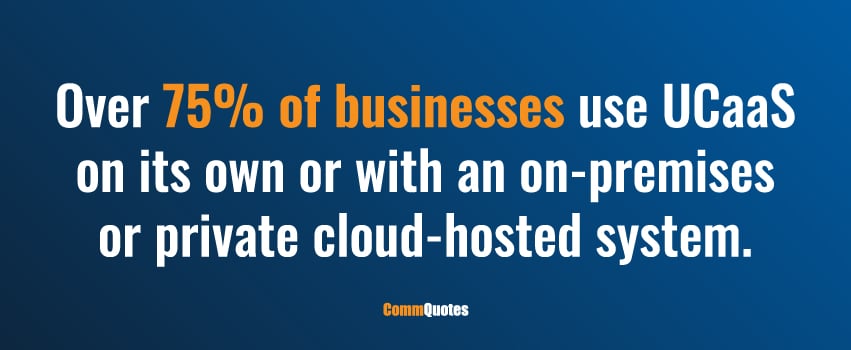
UCaaS, short for Unified Communication as a Service, is a cloud-delivered platform that consolidates voice calling, video conferencing, team messaging, and collaboration tools into a single, unified interface. Adoption is now the norm, with over 75% of businesses already using UCaaS on its own or in combination with an on-premises or private cloud-hosted system.²
UCaaS Meaning in Practice
UCaaS can be best understood through what it solves. Instead of separate apps for phone calls, video meetings, and chat, UCaaS gives employees one platform – accessible from any device – for all of it. That consolidation is the entire point of unified cloud communications, and it's why so many businesses with remote or hybrid teams have made the move.
What Is VoIP?
VoIP stands for Voice over Internet Protocol. It's the technology that transmits voice calls as data over the internet instead of copper phone lines.
VoIP is narrower in scope than UCaaS, as it specifically focuses on how calls are transmitted, not on messaging, video, or broader collaboration. A basic VoIP setup gives you calling, and often some call management features, but not the full suite of tools that make up a unified communications platform.
How Do Voice and Unified Communications Connect?
Voice and unified communications aren't competing categories – voice is a core component within unified communications. Every UCaaS phone system includes VoIP-based calling as one of its foundational features, alongside video, chat, and often contact center functionality.
This is part of why VoIP unified communications gets used as a near-synonym in casual conversation, even though UCaaS represents a meaningfully broader platform than VoIP alone.
UCaaS vs VoIP: What's the Difference?
The main distinction in the UCaaS vs VoIP comparison comes down to scope.
- VoIP is the technology used to transmit voice calls over the internet.
- UCaaS is a broader platform that includes VoIP-based calling plus video, messaging, and collaboration tools in a single system.
Put simply, all UCaaS platforms use VoIP, but not all VoIP setups are UCaaS. The table below summarizes how the two compare on the factors that matter most:
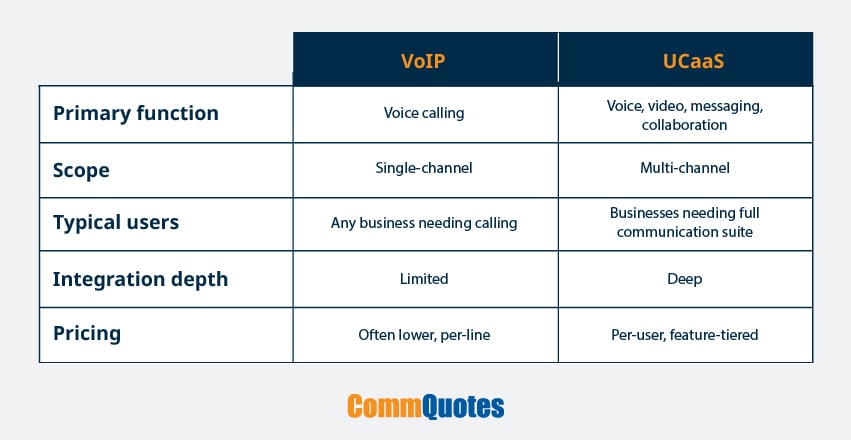
Still not sure which is right for your organization? At CommQuotes, we take the time to understand your communications needs, then deliver vendor-agnostic recommendations from our portfolio of more than 450 vetted suppliers, all at zero cost to you.
5 Benefits of Choosing UCaaS Over Standalone VoIP
Standalone VoIP can eventually become limiting for many growing businesses, especially those supporting distributed teams. A few common reasons organizations move to a full UCaaS phone system include:
1. Reduced App Fatigue
UCaaS gives your teams one platform instead of separate tools for calling, video, and chat, which cuts down on context switching and simplifies daily work.
2. Better Remote and Hybrid Work Support
With UCaaS, employees get full functionality from any device, anywhere, so productivity doesn't depend on being in the office.
3. Deeper Integrations
UCaaS platforms connect with Microsoft 365, Salesforce, and other business tools, so communication data flows into the systems your teams already use.
4. Simplified Vendor Management
UCaaS lets businesses manage one contract and one support relationship instead of several, which saves time and reduces finger-pointing when issues arise.
5. Built-In Scalability
Adding users or features to a UCaaS platform doesn't require new infrastructure, so the platform grows with your business rather than holding it back.
What To Expect From UCaaS Vendors and UCaaS Pricing
The market includes dozens of established UCaaS vendors, with some of the most recognizable being:
- Microsoft Teams Phone
- RingCentral
- 8x8
- Zoom Phone
- Webex Calling
- Nextiva
UCaaS pricing is typically structured per user, per month, with tiered plans based on feature access – basic calling and messaging at the entry level, advanced analytics, contact center integration, and API access at higher tiers. Understanding your feature set requirements before comparing vendors can help prevent overpaying for unused capability as well as under-provisioning for what your team needs.
Enterprise UCaaS: What Changes at Scale?
Enterprise UCaaS introduces additional considerations beyond what a small business typically evaluates, including:
- Multi-site consistency across offices, countries, and time zones
- Compliance requirements specific to regulated industries like healthcare and finance
- Deep CRM and helpdesk integration to support large support and sales teams
- Redundancy and uptime guarantees backed by enterprise-grade SLAs
Each of these factors adds complexity to the evaluation, and at this scale, the difference between a well-chosen UCaaS platform and a poorly-fit one becomes far more expensive to correct after the fact.
How To Choose Between VoIP and UCaaS for Your Business
The right choice will depend on how your business communicates. Here's how the decision typically breaks down:
- VoIP may be sufficient if your primary need is reliable calling, your team doesn't rely heavily on video conferencing or unified messaging, and you're operating with a lean budget.
- UCaaS is typically the better fit if your team needs video, messaging, and voice unified in one platform, you're supporting remote or hybrid workers, or you want deeper integration with tools like Microsoft 365 or your CRM.
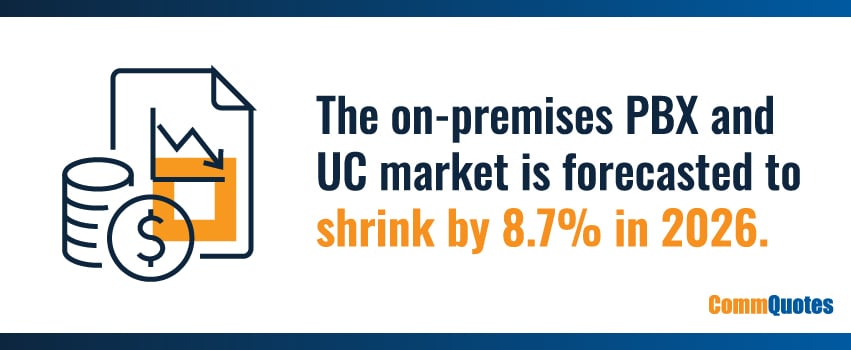
Keep in mind that this decision isn't static. The industry is moving toward unified platforms, with the on-premises PBX and UC market forecasted to drop by 8.7% in 2026.3 A standalone VoIP setup that works well now may need another look as your team's collaboration needs grow.
UCaaS vs VoIP FAQs
Is UCaaS the same as VoIP?
No. VoIP is the technology that carries voice calls over the internet, while UCaaS is a broader cloud platform that bundles that calling with video, messaging, and collaboration tools in one interface. The two get used interchangeably because every UCaaS platform runs on VoIP for its calls. The relationship only goes one way, though: all UCaaS uses VoIP, but a standalone VoIP setup isn't UCaaS. If you only need calling, VoIP covers it. If you need calling plus everything else in a single system, that's UCaaS.
Is UCaaS more expensive than VoIP?
Usually, yes. Standalone VoIP tends to cost less because it focuses on calling and a few call management features, so you're paying for a narrower service. UCaaS is priced per user, per month, with tiered plans that add analytics, contact center features, and API access at higher levels, so it carries a higher sticker price. The gap often narrows once you account for the separate video, messaging, and collaboration tools UCaaS replaces. Map your feature requirements before comparing plans so you don't overpay for capability your team won't use.
What can UCaaS do that standalone VoIP can't?
Standalone VoIP gives you calling and often some call management, but not much beyond voice. UCaaS adds video conferencing, team messaging, and collaboration tools, then ties them into one interface your team reaches from any device. It also integrates with business software like Microsoft 365, Salesforce, and other CRMs, so communication data flows into the systems your team already uses. Because it's one platform instead of several disconnected apps, UCaaS also cuts down on app switching and lets you scale by adding users or features without new infrastructure.
Is VoIP or UCaaS better for remote and hybrid teams?
UCaaS is usually the stronger fit for remote and hybrid teams. It gives employees full voice, video, and messaging functionality from any device, so productivity doesn't depend on being in the office. Standalone VoIP can handle calls for a distributed team, but it leaves the video and messaging gaps that remote work tends to expose, which pushes people back into separate apps. If most of your team works outside a central office and relies on more than voice, UCaaS keeps those tools unified in one place.
When should a business switch from standalone VoIP to UCaaS?
Consider the switch when voice alone stops covering how your team actually communicates. A standalone VoIP setup can work well for lean, call-focused operations, but it often becomes limiting as teams grow, add remote workers, or lean on video and messaging. Deeper integration needs are another signal, since UCaaS connects with tools like Microsoft 365 and your CRM in ways basic VoIP doesn't. The industry is trending toward unified platforms, so a VoIP setup that fits today is worth revisiting as your collaboration needs expand.
Find the Right Fit With CommQuotes
Choosing between VoIP and UCaaS and finding the best provider within either category isn't a decision that should be made from a vendor's sales deck alone. The UCaaS and VoIP markets are both crowded, and the platform that demos well isn't always the one that performs well for your specific team.
At CommQuotes, our team helps businesses evaluate their communication needs and compares top providers across our portfolio of 450+ vetted suppliers – delivering honest, vendor-agnostic recommendations at better-than-direct pricing and zero cost to you. Connect with our team today to get started.
Sources:
- https://www.uctoday.com/unified-communications/who-are-gartners-2026-ucaas-magic-quadrant-leaders-and-who-just-got-cut
- https://www.metrigy.com/category/workplace-collaboration
- https://www.metrigy.com/press-release-global-ucaas-market-up-6-1-in-2025-as-businesses-continue-to-migrate-from-on-premises-solutions-led-by-market-leader-microsoft-teams-2